
POS System vs. Payment Terminal: Benefits, Features & Differences
4 Min
October 30, 2026
Author:
Garry


Businesses operating in competitive markets need a reliable payment technology that supports smooth transactions, accurate sales records, secure checkout experiences, and long-term growth. That’s why, businesses when comparing payment solutions, one common question arises: should you invest in a complete point-of-sale (POS) system or use a standalone payment terminal?
For this very reason, understanding the difference between a POS system vs. payment terminal helps businesses choose the right setup for their operations. Both support payment acceptance, but serve different purposes for businesses.
A payment terminal primarily captures and processes customer payments. On the other hand, a POS system combines payment acceptance with tools for managing sales, inventory, orders, and business performance.
The right choice between a POS system and payment terminal depends on your business model, transaction volume, operational requirements, and plans for expansion. This guide explains the differences between a POS system and a card terminal, their benefits, key features, costs, and how to choose the right payment solution for your business.
What Is a POS System?
It’s a combination of software and, in many cases, hardware that helps businesses manage sales transactions and related operations. It provides a central place to record purchases, calculate totals, accept payments, and access sales information.
POS system may include a computer or tablet, a barcode scanner, a receipt printer, a cash drawer, and a payment terminal. Businesses often use cloud-based POS solutions to monitor sales, manage products, and review performance across multiple locations.
Key Features of a POS System
The features available in a POS system depend on the provider, software plan, and industry. Common capabilities include:
- Sales and order management
- Inventory tracking
- Payment acceptance
- Sales reporting
- Customer management
- Employee management
- Business integrations
Benefits of a POS System
With a POS system, it is possible for firms to centralize their checking out operations and data. Instead of keeping separate track of transactions, product data, and performance, a lot of these functions can be carried out via the single medium provided.
For the retailers, this could increase visibility of inventory levels and decrease paperwork. Restaurants can utilize industry-oriented features of POS systems to place orders and coordinate their services. For firms operating from multiple branches, it is also helpful to have centralized reports and analysis of their sales performance.
What Is a Payment Terminal?
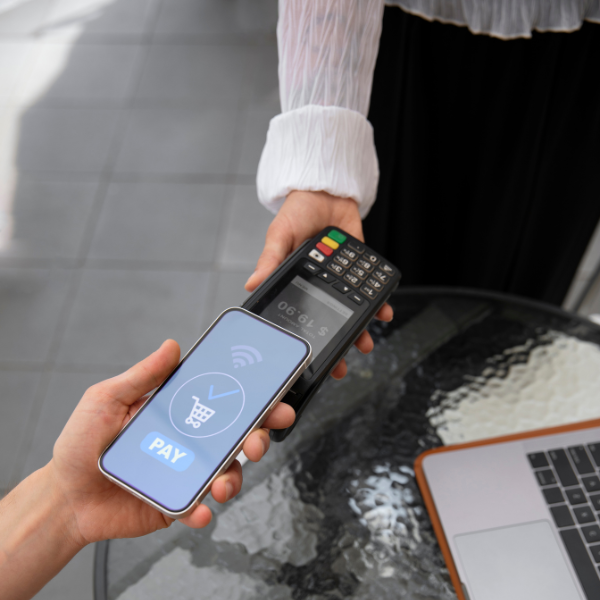
It’s a device or compatible application designed to accept electronic payments. It captures payment information and securely communicates with the relevant payment infrastructure to request transaction authorisation. Depending on the device and provider, customers may pay using chip-and-PIN cards, contactless cards, or supported digital wallets such as Apple Pay and Google Pay. Some terminals also support magnetic-stripe cards, although availability depends on the device, payment network, and market.
Key Features of a Payment Terminal
- Card payment acceptance
- Contactless payments
- PIN entry
- Transaction records
- Refund processing
- Receipt generation
- Connectivity
However, some modern smart terminals have added functionality using applications. Conversely, an independent payment terminal lacks the inventory, customer management, and business reporting functionality that comes with a full POS system.
Benefits of a Payment Terminal
Use of a payment terminal enables an easy method of taking payments through electronic means without having to purchase a full-fledged business management system. Such an approach can be used by consultants, freelancers, mobile businesses, market stalls, and small businesses that handle order handling and accounting through other channels.
A standalone terminal might not need much configuration and training compared to a whole POS system. Use of mobile technology will enable businesses to receive payments from clients from their premises, temporary stalls, or deliveries. Use of a payment terminal is a good option for business organizations with basic needs who want payment capabilities.
Understanding the Key Differences Between POS System and Payment Terminal
POS System vs. Payment Terminal: Which Is Better for Different Businesses?
The most suitable option between the POS system and payment terminal depends upon the business type and other factors. Neither solution is universally better and depends on how a business sells products or services and what it needs to manage beyond collecting payments.
Retail Stores
Retail businesses often benefit from a POS system because they need to manage product catalogues, prices, stock levels, discounts, and sales reports. A connected payment terminal completes the payment while the POS records the corresponding sale. Businesses with multiple checkout counters may also benefit from centralised inventory and reporting.
Restaurants and Cafés
Restaurants may need POS features for menu management, table orders, bill splitting, kitchen coordination, and sales reporting. A suitable system can connect these workflows with payment acceptance.
Professional and Field Services
Consultants, tradespeople, personal service providers, and mobile businesses may only need to collect payments after completing a service. A portable card terminal or compatible mobile payment solution can be practical when there is no need to track product inventory or manage complex orders.
On the other hand, a POS system becomes more valuable when the business adds employees, multiple service categories, or more detailed reporting requirements.
E-commerce and Omnichannel Businesses
Online businesses do not necessarily need a physical POS system to accept payments through their websites. They generally need a reliable e-commerce payment solution and compatible payment processing infrastructure.
However, businesses that sell both online and physical stores may benefit from systems that connect sales records and inventory across channels. For these businesses, choosing the right payment infrastructure is just as important as selecting the checkout interface. A payment orchestration platform can help manage multiple payment service providers and methods through a unified integration, depending on the supported setup.
Enterprises and Multi-Location Businesses
A large corporation requires something more than just a payment terminal, which includes reporting, coordination of payments, various payment processors, and seamless payment experience in regions.
POS solution will help for performing tasks at the store level, but an advanced payment infrastructure solution will be helpful for managing transactions in in-store, online, and mobile channels. A company that operates internationally will also have to manage customer preferences, currencies, and intelligent payment routing to improve transaction performance across markets.
How PayFirmly Supports Flexible Payment Operations
PayFirmly offers a payment orchestration platform that helps businesses work with various payment service providers as well as 500 plus payment methods. This company offers many solutions like intelligent payment routing, fraud protection, multi-currency payments, and an omnichannel payment solution.
Payment orchestration will be useful for those businesses that have to deal with payments from different regions as well as different channels of customers.
Looking to optimize your payment structure? Find out more about how PayFirmly can help you in your business.
Conclusion
The decision to use either a POS system or a payment terminal is influenced by the requirements of your business and its future growth prospects.
A POS system not only includes all features offered by a payment terminal but also has a wider range of functionality in terms of sales management, inventory management, ordering, and reporting.
And as the business grows and gains more sales channels and markets, it requires an equally flexible payment system infrastructure.
We assist businesses to integrate with several payment providers and methods via a single payment orchestration platform.
Frequently Asked Questions
1. What is the main difference between a POS system and a payment terminal?
POS system handles transactions and other business processes like order management, inventory management, and reporting. Payment terminals mainly accept payments in an electronic form. In many companies, POS and payment terminals are integrated for sales and transaction processing in an integrated way.
2. Can a payment terminal work without a POS system?
Yes. A standalone payment terminal can accept supported card and contactless payments without a full POS system, provided the business has the required payment processing arrangement. Sales, inventory, and other records may need to be managed separately.
3. Is a POS system more expensive than a payment machine?
The cost of the POS system will be higher since it will have extra costs such as software subscriptions and hardware, and also it will need to be installed and integrated. The payment machine will have fewer functionalities and will be cheaper to acquire at first.
4. Can a POS system accept card and contactless payments?
Yes. POS systems can process payments using either cards or contactless technology through an inbuilt card reader or a compatible payment terminal. The payment options that are available will be dictated by the hardware used and the software configuration.
5. How can businesses improve payment processing across POS and online channels?
Businesses can review integrated payment systems that are compatible with their POS systems and their preferred payment systems for online checkout. The use of an orchestration payment platform, such as PayFirmly, can link several payment systems and help in intelligent routing for businesses that qualify.
Other Related Articles

August 26, 2025
What Are Online Payment Solutions? A Beginner's Guide


Secure Crypto Payment Orchestration & Processor with PayFirmly
The future of adult payment processing is intelligent, compliant, and built around you.
Join leading adult brands using PayFirmly to boost approvals, cut fees, and simplify multi-processor management — all from one secure dashboard.
